

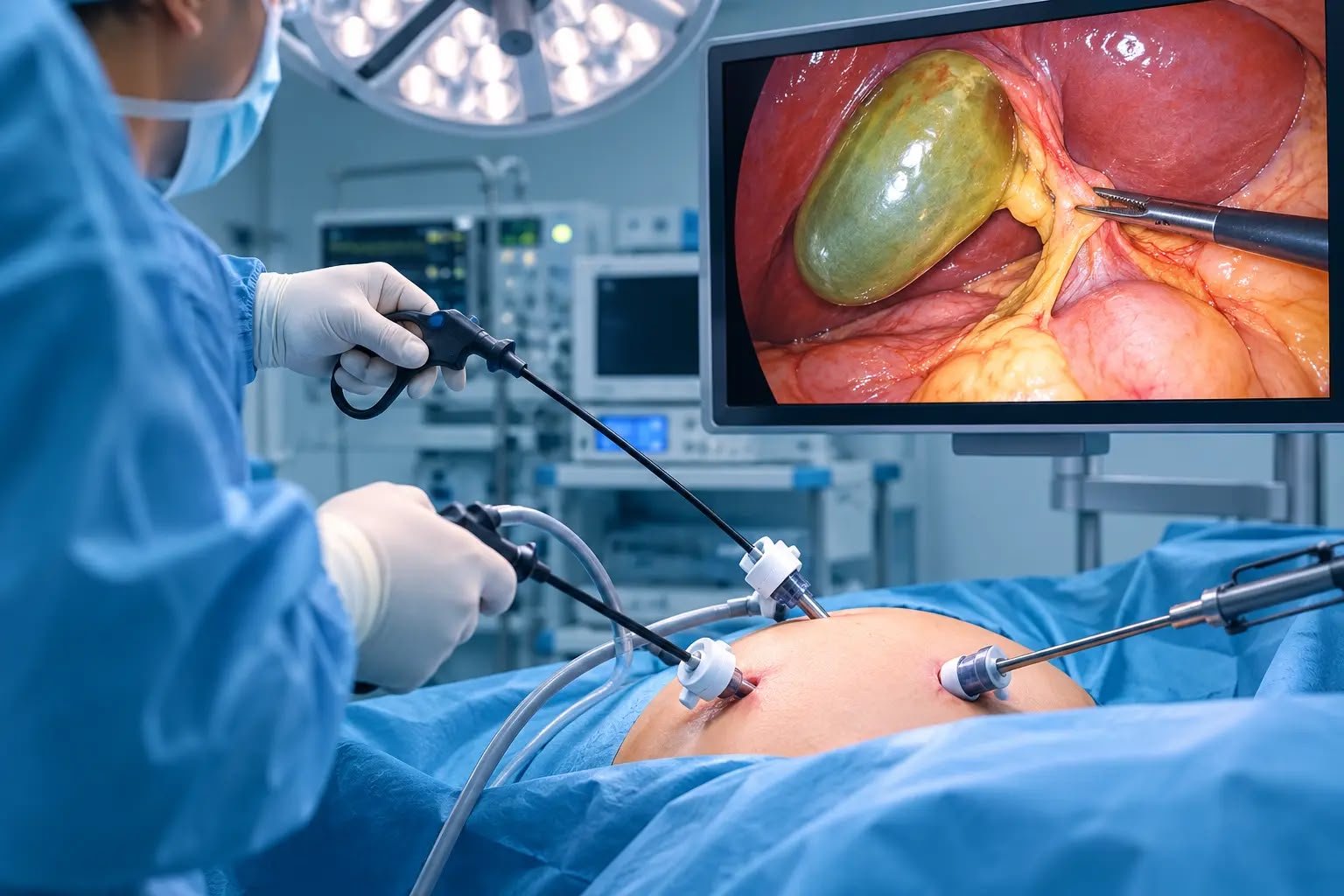
Laparoscopic cholecystectomy is a minimally invasive surgical procedure to remove the gallbladder, most commonly performed for gallstones, recurrent gallbladder pain, inflammation, or related complications. The gallbladder is a small organ beneath the liver that stores bile, which helps digest fats. During the procedure, the surgeon makes a few small incisions in the abdomen and uses a thin camera and specialized instruments to remove the gallbladder. The surgery is usually performed under general anaesthesia and commonly takes around 30–90 minutes, depending on the complexity of the case.
Benefits and Recovery: Compared with traditional open surgery, laparoscopic surgery generally causes less pain, leaves smaller scars, and allows a faster recovery and shorter hospital stay. Most patients can gradually resume normal activities within 1–2 weeks, depending on their recovery and the surgeon’s advice. After surgery, bile flows directly from the liver into the intestine, and most people can digest food normally. Mild temporary bloating or loose stools may occur. Patients should follow their surgeon’s instructions regarding diet, wound care, medicines, and activity. Seek urgent medical attention for severe or worsening abdominal pain, persistent fever, repeated vomiting, jaundice, or redness or discharge from the wound.