

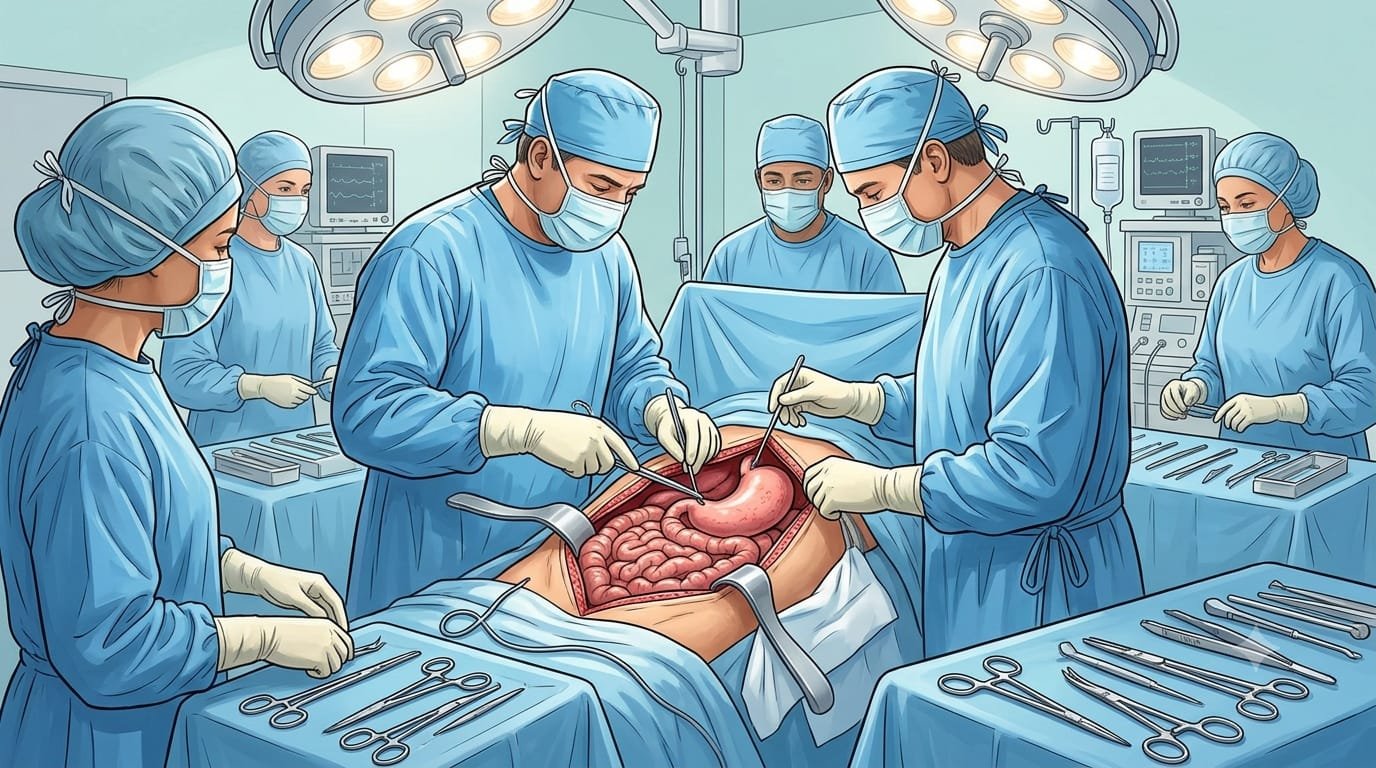
Laparotomy is a surgical procedure in which the surgeon makes an incision in the abdomen to access and examine the internal organs. It may be performed to diagnose or treat various conditions, such as abdominal infections, intestinal obstruction, internal bleeding, tumours, injuries, or certain gynaecological problems. The surgery is usually performed under general anaesthesia, so the patient remains asleep during the procedure. Depending on the underlying condition, the surgeon may examine the abdominal organs, remove diseased tissue, repair damaged organs, or perform other necessary surgical procedures. The size and location of the incision depend on the condition being treated and the type of surgery required.
After laparotomy, the patient is closely monitored in the hospital, and pain relief is provided as needed. Early movement, breathing exercises, adequate fluid intake, and gradual resumption of food as advised by the medical team help support recovery. The surgical wound should be kept clean and dry, and heavy lifting or strenuous activities should be avoided until the surgeon gives permission. Recovery may take several weeks, depending on the type of surgery and the patient’s general health. The patient should seek medical attention if they develop fever, increasing abdominal pain, persistent vomiting, abdominal swelling, redness or discharge from the wound, or difficulty passing urine or stool. Regular follow-up is important to ensure proper wound healing and recovery.