
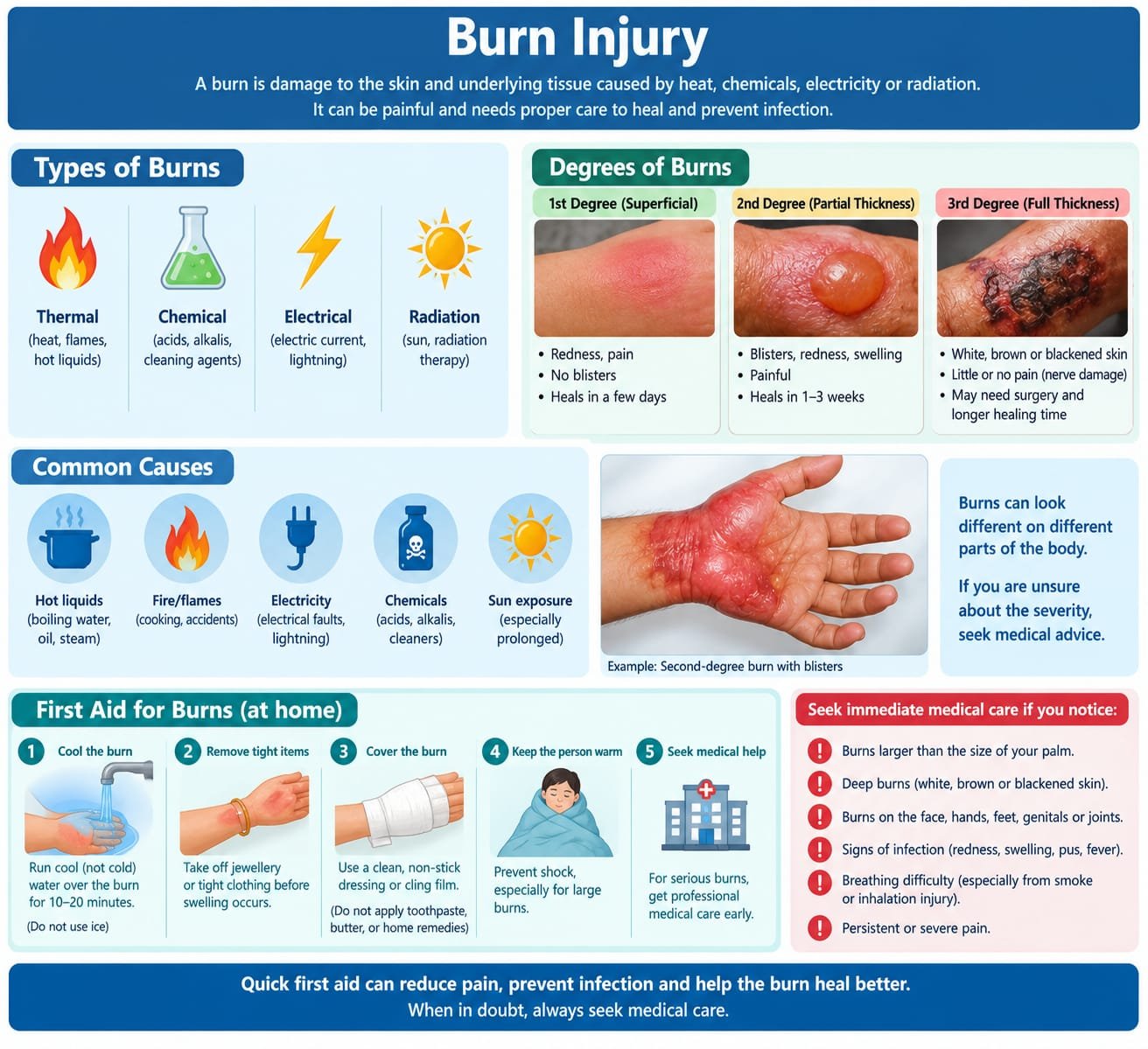
A burn injury occurs when the skin or underlying tissues are damaged by heat, hot liquids, flames, chemicals, electricity, or radiation. The severity of a burn depends on its depth, size, and location. Minor burns may cause redness, pain, and swelling, while more severe burns can cause blisters, damage to deeper tissues, and loss of skin. Immediate first aid is important to reduce further damage. The affected area should be cooled under cool running water for 20 minutes, and any jewellery or tight clothing near the burn should be removed unless stuck to the skin. Ice, toothpaste, butter, or other home remedies should not be applied. Serious burns, including deep or extensive burns and burns involving the face, hands, feet, genitals, or major joints, require urgent medical assessment.
Treatment depends on the severity of the burn and may include wound cleaning, appropriate dressings, pain relief, fluids, and infection prevention. Severe burns may require hospital admission or surgery, including skin grafting. During recovery, the patient should keep the wound clean, follow medical advice, and avoid breaking blisters or removing damaged skin. Good nutrition and adequate fluid intake support healing. Medical attention should be sought if there is increasing pain, spreading redness, swelling, pus, fever, or delayed wound healing. If the burn is caused by chemicals or electricity, or if there is difficulty breathing or suspected smoke inhalation, emergency medical care is essential.