

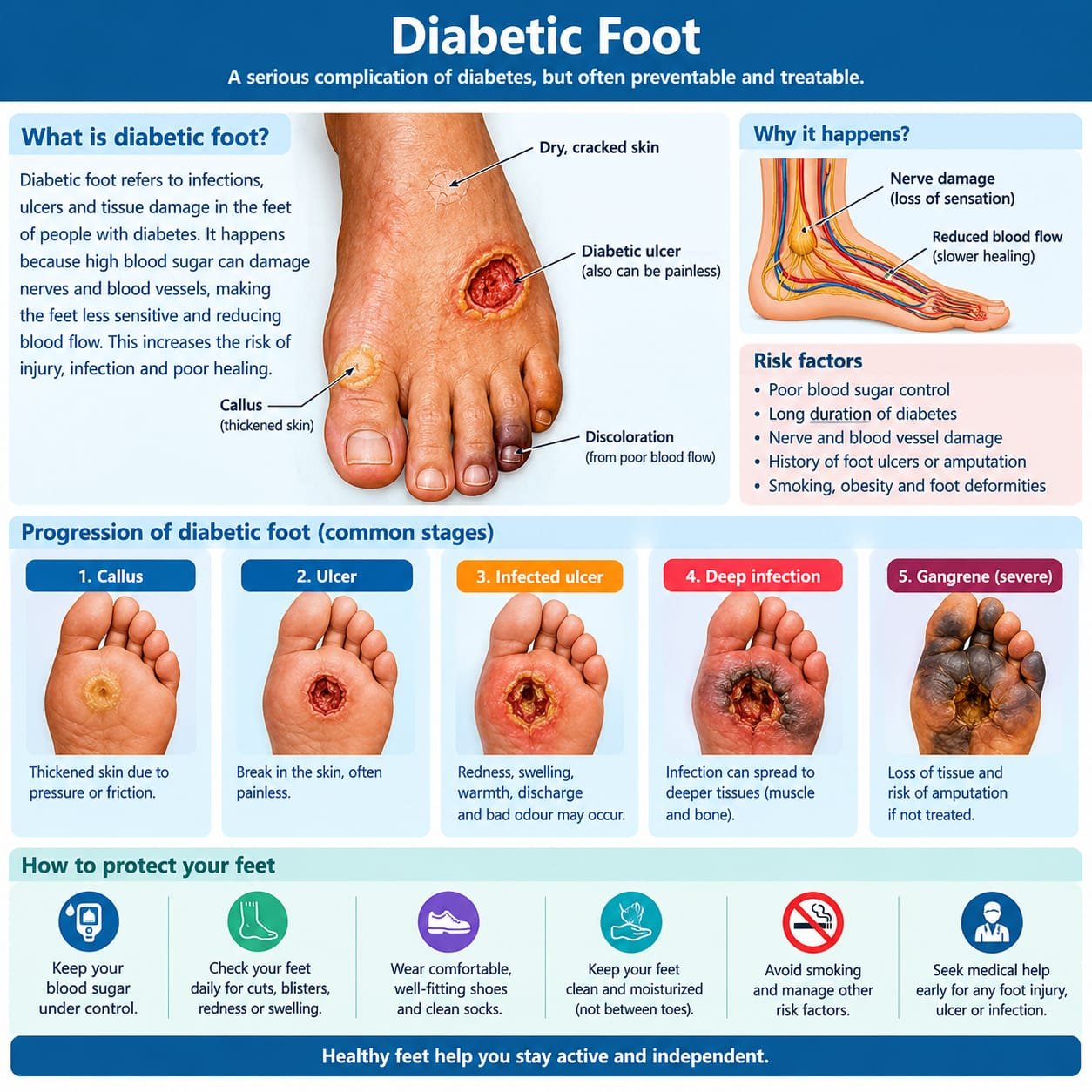
Diabetic foot refers to foot problems that develop in people with diabetes due to high blood sugar levels over a long period. Diabetes can damage the nerves of the feet, causing reduced sensation, numbness, or tingling, and can also reduce blood circulation. As a result, even a small cut, blister, or wound may go unnoticed and heal slowly, increasing the risk of infection, ulcers, and, in severe cases, tissue damage. Proper foot care and good blood sugar control are essential to prevent these complications. Patients should inspect their feet daily for cuts, swelling, redness, blisters, or changes in skin colour and seek medical advice promptly if any abnormality is noticed.
To prevent diabetic foot complications, patients should wash their feet daily with lukewarm water, dry them carefully, especially between the toes, and apply moisturiser to dry skin while avoiding the areas between the toes. Nails should be trimmed carefully, and patients should wear well-fitting footwear and clean socks. Walking barefoot, using hot water bottles on the feet, and removing corns or calluses at home should be avoided. Blood sugar levels should be monitored regularly, and routine foot examinations should be performed by a healthcare professional. If a wound, ulcer, pus, increasing redness, swelling, fever, or a black or bluish discoloration develops, urgent medical attention is necessary, even if there is no pain.