

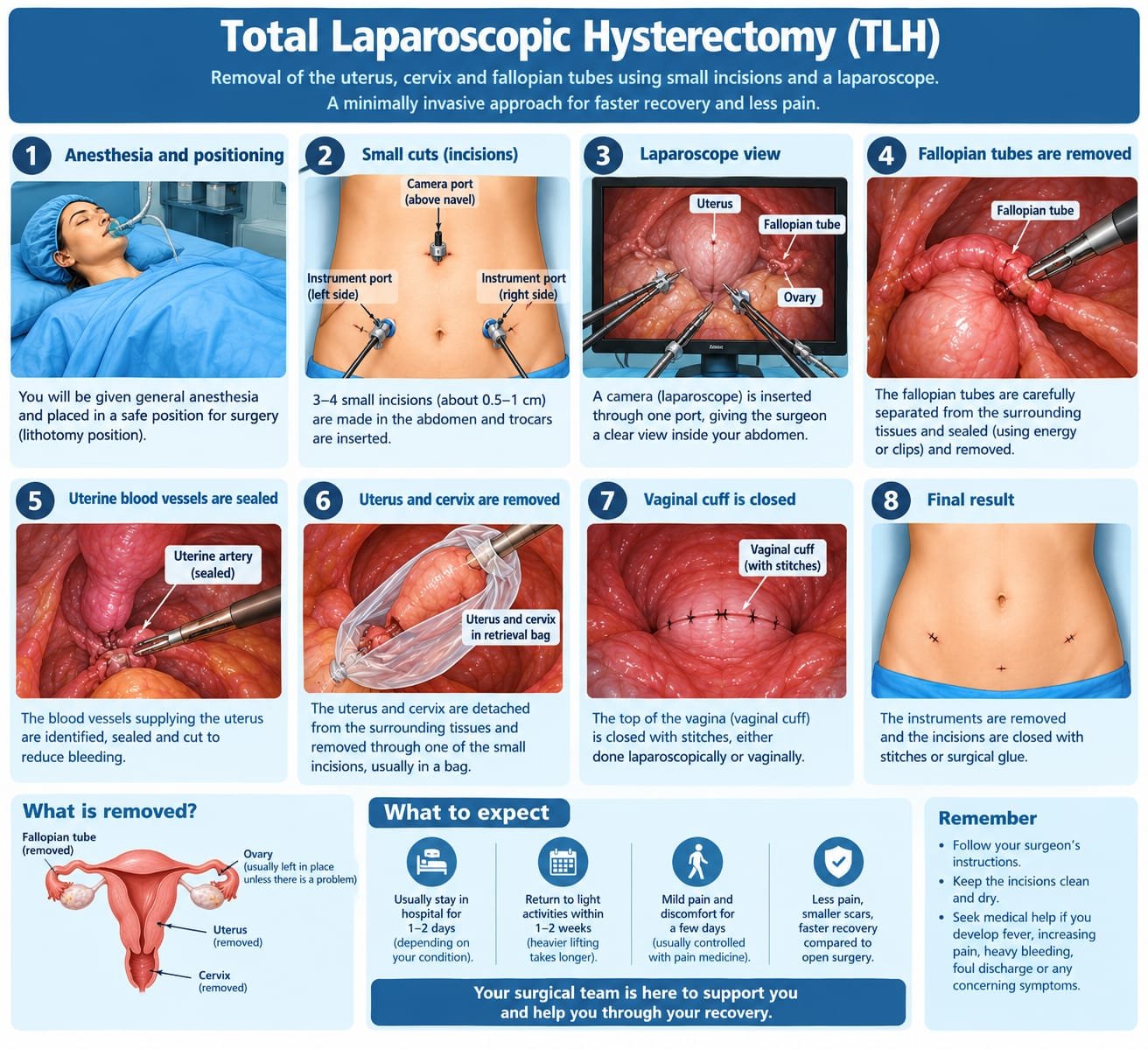
Total laparoscopic hysterectomy is a minimally invasive surgical procedure in which the uterus and cervix are removed using a laparoscope (a thin tube with a camera) and specialized surgical instruments inserted through small incisions in the abdomen. The procedure is performed under general anaesthesia, so the patient remains asleep during surgery. It may be recommended for conditions such as uterine fibroids, heavy or abnormal uterine bleeding, adenomyosis, endometriosis, or uterine prolapse, depending on the individual case. The ovaries and fallopian tubes may be removed or preserved depending on the medical condition and the surgeon’s recommendation. Compared with open surgery, laparoscopic hysterectomy generally involves smaller incisions, less postoperative pain, a shorter hospital stay, and faster recovery.
After surgery, the patient is monitored closely and may experience mild abdominal pain, bloating, tiredness, or light vaginal bleeding for a few days. Early walking, adequate fluid intake, a balanced diet, and prescribed medications help support recovery and reduce the risk of complications. Most patients can gradually resume normal daily activities within two to six weeks, depending on their recovery and the surgeon’s advice. The patient should avoid heavy lifting, strenuous exercise, and vaginal intercourse until cleared by the surgeon, usually around six weeks. Medical attention should be sought if there is fever, severe or worsening abdominal pain, heavy vaginal bleeding, foul-smelling discharge, difficulty passing urine, or redness or discharge from the incision sites. Follow-up visits are important to ensure proper healing and recovery.