

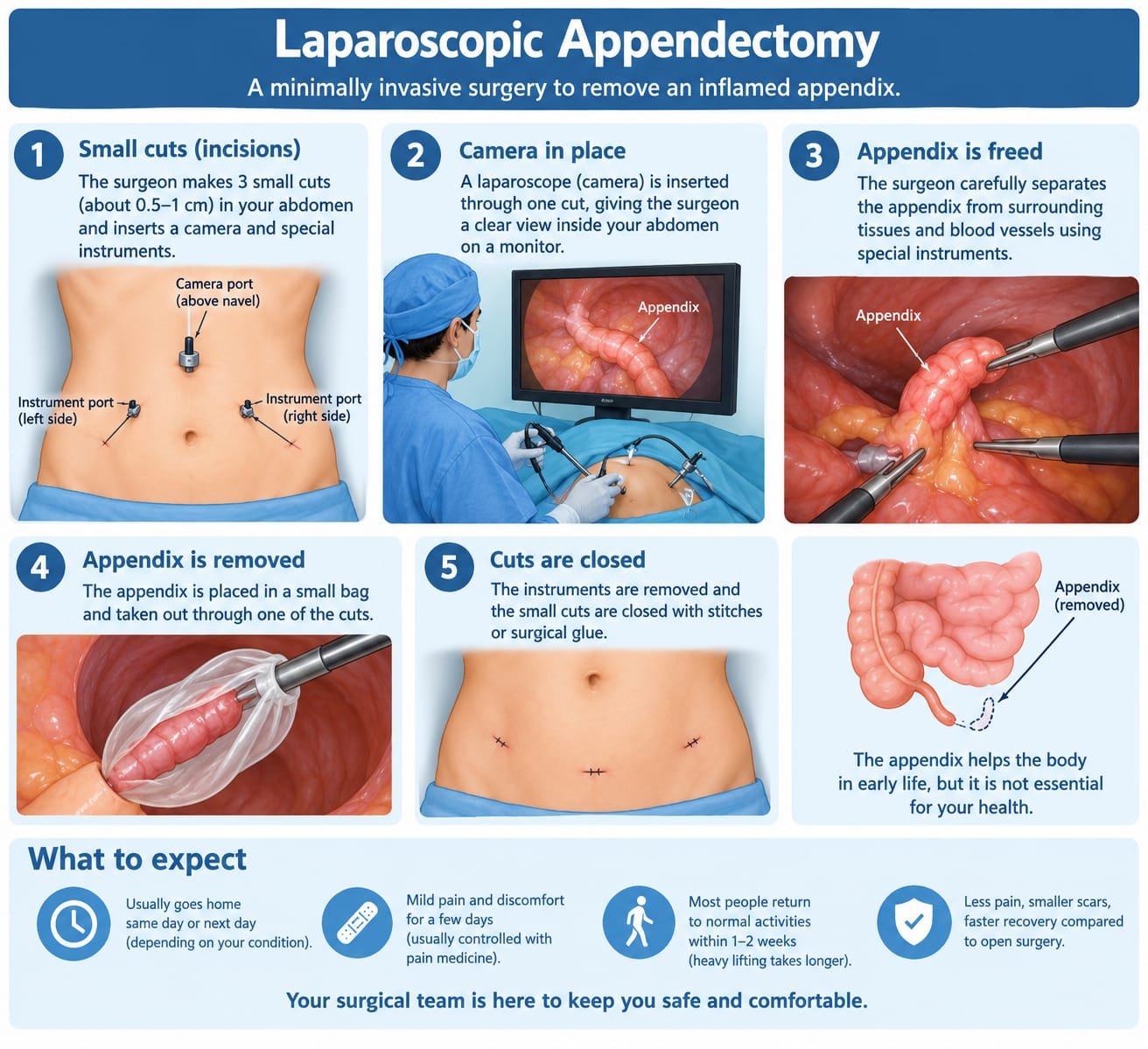
Laparoscopic appendectomy is a minimally invasive surgical procedure performed to remove the appendix, usually when it becomes inflamed or infected, a condition known as appendicitis. The surgery is performed under general anaesthesia, so the patient remains asleep and does not feel pain during the procedure. The surgeon makes a few small incisions in the abdomen and inserts a thin tube with a camera (laparoscope) and special surgical instruments to remove the appendix. Compared with open surgery, this technique generally results in less postoperative pain, smaller scars, a shorter hospital stay, and faster recovery.
After surgery, the patient is monitored until fully awake and stable. Mild abdominal pain, bloating, or shoulder pain may occur for a short period and can usually be managed with prescribed medication. The patient is encouraged to start walking early, drink fluids, and gradually resume eating as tolerated. Most patients can return to normal daily activities within one to two weeks, depending on their recovery and the surgeon’s advice. The patient should keep the incision sites clean and dry and seek medical attention if they develop fever, worsening abdominal pain, persistent vomiting, redness or discharge from the wounds, or abdominal swelling. Regular follow-up with the surgeon is important to ensure proper healing.